Rhinoplasty Knowledge Center
An in-depth guide to nose surgery — surgeon selection, natural results, revision rhinoplasty, technique, recovery, and long-term outcomes — from Harvard-trained plastic surgeon Dr. Mark Markarian.
Book A Virtual ConsultationHow to Choose a Rhinoplasty Surgeon
Rhinoplasty is widely regarded as the most technically demanding procedure in plastic surgery, because even a one- or two-millimeter change to the tip, bridge, or nostrils can alter the entire facial balance. Choosing the right surgeon is the single biggest factor in getting a result you'll be happy with long term.
“Rhinoplasty is a game of millimeters — the slightest adjustment to the dorsum can affect the tip, or vice versa.”
— Dr. Mark Markarian, MD MSPH FACS
Dr. Markarian's consultations typically run 30–45 minutes and include a detailed examination of the nasal tip, nostrils, symmetry, and bridge, plus a candid conversation about achievable outcomes.
He encourages patients to bring photographs of nose shapes they admire to make it easier to identify their desired aesthetic and goals, and to write down a list of questions from their own research or from talking to friends — nothing should go unanswered before surgery.
What to Look For
- Board certification — the American Board of Plastic Surgery, not a general cosmetic credential
- Rhinoplasty-specific volume — ask how many they perform per year
- Before-and-afters — of noses similar in shape to yours
- A surgeon who listens — not just sells a technique
- Revision experience — signals deeper anatomical mastery
Dr. Markarian's Difference
Every patient receives his private cell phone number, so questions never have to wait for office hours during the surgical journey.
Natural Rhinoplasty
The era of the “obvious nose job” — overly scooped, overly small, disconnected from the rest of the face — is over. Today's patients want a nose that looks like it was always theirs, just refined.
Small, Deliberate Changes
Softening a dorsal hump, refining a bulbous or overturned tip, correcting asymmetry, or adjusting projection — while preserving the features that make a face recognizably the patient's own.
Structural Techniques
An undetectable look often requires more nuance than a dramatic reshaping — angulated caudal septal trim, spreader grafts, alar contour grafts, and a soft tissue tip graft where needed.
Facial Harmony First
The goal is always to complement the rest of the face, not to create a nose that draws attention to itself. Dr. Markarian's results maintain harmony and symmetry with each patient's other features.
Today's Most Requested Changes
Reducing a dorsal hump, refining a bulbous or drooping tip, narrowing the bridge, and correcting asymmetry — all addressed in a way that keeps the nose looking like it belongs on the patient's face.
By the Numbers
About 4 months post-op, roughly 80% of swelling has typically improved, with results continuing to refine for another 8 months or so — proof that the “natural” look is a process, not an instant transformation.
Revision Rhinoplasty
Revision rhinoplasty addresses concerns left over from a previous nose surgery — whether aesthetic (asymmetry, an over-resected bridge, a pinched tip) or functional (breathing difficulty). Up to 15% of rhinoplasty patients seek a revision after their first surgery, largely because the procedure is so unforgiving of small errors.
Revision cases are more complex: nasal tissue has already been altered, scar tissue is present, and cartilage that was previously removed often must be replaced using grafts from the patient's septum, ear, or rib. Dr. Markarian evaluates each case individually — using open or closed technique depending on the extent of correction needed.
Discuss a Revision ConsultationTiming a Revision
Most surgeons recommend waiting until swelling and healing have fully settled before pursuing correction.
Before Revision
After First Surgery
Functional Concerns
Where breathing problems are present, functional testing identifies the precise cause before the correction is planned.
Male Rhinoplasty
Men make up roughly 20% of rhinoplasty patients nationally, and male rhinoplasty requires a different aesthetic target than female rhinoplasty. Where female rhinoplasty often softens and slightly upturns tip projection, male rhinoplasty generally aims to preserve a straighter bridge, a stronger, less rotated tip, and a more angular profile — refining the nose without feminizing it.
Common goals include reducing a dorsal hump, deprojecting an overly prominent tip, and improving symmetry, all while maintaining the structure that reads as masculine.
View Male Rhinoplasty PagePatients Are Men
Masculine Balance
Aesthetic Goal
Refined, not feminized — preserving strength and angularity while removing what bothers the patient.
Ethnic Rhinoplasty
Ethnic rhinoplasty — including Asian, Middle Eastern, African American, and Hispanic rhinoplasty — requires preserving features that reflect a patient's heritage while addressing their specific concerns. This is fundamentally different from a one-nose-fits-all approach.
Why It's Different
- Many patients have thinner tip cartilage and a flatter nasal bridge
- The surgical goal is often to build and add structure, not just reduce
- Cartilage or graft material is used to define the bridge and tip
- Over-removing cartilage is a common mistake that leaves the nose unstable
Dr. Markarian's Approach
Enhancing shape and definition while keeping each patient's natural ethnic facial characteristics intact — never imposing a single template nose on every patient.
Thick Skin Rhinoplasty
Patients with thicker nasal skin face a unique challenge: skin that doesn't shrink-wrap as tightly to the underlying cartilage framework, which can mask fine tip definition and prolong visible swelling after surgery.
Successful thick skin rhinoplasty depends on building a stronger, more well-defined cartilage framework underneath — since subtle reshaping alone won't show through thicker skin — along with techniques to thin and refine the underlying soft tissue where appropriate.
What to Expect
Thicker-skinned patients should expect a longer timeline before final results emerge, since swelling resolves more slowly than with thinner skin. Final tip definition often continues to sharpen well into the first post-operative year.
Ultrasonic Rhinoplasty
Ultrasonic (or “piezo”) rhinoplasty uses ultrasonic vibration to precisely sculpt nasal bone, rather than the traditional rasps, chisels, and osteotomes used in conventional bone work.
Because the instrument is selective for bone and doesn't disturb surrounding soft tissue, this technique can offer more controlled bone reshaping with reduced trauma, swelling, and bruising in the right candidates.
Best Suited For
Refining a bony dorsal hump or narrowing the bony bridge. The right approach always depends on each patient's individual nasal anatomy, assessed in detail during consultation.
"No other surgery in plastic surgery demands such attention to detail as rhinoplasty. The goal is always to complement the rest of the face."Dr. Mark Markarian — MD, MSPH, FACS · Harvard Aesthetic Fellowship
The Rhinoplasty Library
Three in-depth article series from Dr. Markarian — eighteen chapters covering how to choose your surgeon, the philosophy behind natural results, and the truth about ultrasonic technology. Select an article to browse its chapters.
How to Choose the Best Rhinoplasty Surgeon in Boston
Article 01 · 6 Chapters Chapter 1 of 6
Choosing a Surgeon
How to Choose the Best Rhinoplasty Surgeon in Boston
There is no universally accepted “best” rhinoplasty surgeon. Dr. Markarian explains what patients should actually look for — and why the most dramatic result is rarely the best one.
Read Chapter 1 → Chapter 2 of 6
Philosophy & Outcomes
Natural Rhinoplasty vs. Trend-Driven Rhinoplasty
Why the “Instagram nose” ages poorly — and what separates a timeless, natural result from a trend-driven transformation.
Read Chapter 2 → Chapter 3 of 6
Research & Due Diligence
How to Evaluate a Rhinoplasty Surgeon's Website
What a surgeon’s website actually tells you about their practice — and the red flags most patients overlook.
Read Chapter 3 → Chapter 4 of 6
Function & Anatomy
Why Breathing Matters More Than Most Patients Realize
Every cosmetic decision affects function. Dr. Markarian explains the nasal structures most patients have never heard of — and why they matter.
Read Chapter 4 → Chapter 5 of 6
The Consultation Process
How to Compare Multiple Rhinoplasty Consultations
When two surgeons give completely different recommendations, which do you trust? A framework for making the right decision.
Read Chapter 5 → Chapter 6 of 6
Patient Questions Answered
Frequently Asked Questions About Rhinoplasty
Swelling timelines, open vs. closed technique, revision surgery, breathing improvement — direct answers from Dr. Markarian.
Read Chapter 6 →Natural Rhinoplasty: Why the Best Results Often Look Like No Surgery Was Performed
Article 02 · 6 Chapters Chapter 1 of 6
Philosophy & Technique
Natural Rhinoplasty vs. Preservation Rhinoplasty
Preservation rhinoplasty is one of the most heavily marketed terms in modern rhinoplasty — but it is not the same thing as a natural result. Dr. Markarian explains the difference.
Read Chapter 1 → Chapter 2 of 6
Tools vs. Outcomes
Natural Rhinoplasty vs. Ultrasonic Rhinoplasty
Ultrasonic instruments address only the bony third of the nose. Why the tool matters far less than the plan — and the surgeon holding it.
Read Chapter 2 → Chapter 3 of 6
Trauma Cases
Natural Rhinoplasty After Nasal Trauma
A broken nose changes more than appearance. How rhinoplasty after trauma restores both the look and the function a patient remembers.
Read Chapter 3 → Chapter 4 of 6
Revision
Natural Revision Rhinoplasty: Restoring What Was Lost
The most common revision problem is too much change. How revision surgery rebuilds structure — and gives patients their identity back.
Read Chapter 4 → Chapter 5 of 6
Myths, Corrected
10 Common Misconceptions About Natural Rhinoplasty
Natural doesn't mean minimal, smaller isn't always better, and perfection isn't the goal — ten misconceptions Dr. Markarian corrects most often.
Read Chapter 5 → Chapter 6 of 6
Patient Questions
Frequently Asked Questions About Natural Rhinoplasty
Will you still look like yourself? Will people know? Direct answers to the questions patients ask most about natural rhinoplasty.
Read Chapter 6 →The Truth About Ultrasonic Rhinoplasty: Looking Beyond the Marketing
Article 03 · 6 Chapters Chapter 1 of 6
Setting the Stage
Introduction: Looking Beyond the Marketing
Ultrasonic rhinoplasty is everywhere online — presented as a new operation, a better result, a must-have. Here's how to think about it clearly.
Read Chapter 1 → Chapter 2 of 6
The Technology
What Is Ultrasonic Rhinoplasty? The Technology Behind the Buzzword
Piezoelectric instruments sculpt bone — nothing more, nothing less. What the device actually does during surgery, in plain language.
Read Chapter 2 → Chapter 3 of 6
Evidence vs. Advertising
What Does the Scientific Evidence Actually Show?
Separating peer-reviewed findings from promotional claims — what studies genuinely support, and where the data is still limited.
Read Chapter 3 → Chapter 4 of 6
Honest Comparison
Ultrasonic vs. Traditional Osteotomies: What Actually Changes — and What Does Not
Each approach has advantages, limits, and appropriate applications. Why "modern vs. outdated" is marketing framing, not surgical reality.
Read Chapter 4 → Chapter 5 of 6
Reading the Claims
Common Marketing Claims — and How Patients Should Interpret Them
"More precise." "Better results." "Dramatically easier recovery." Six claims patients see everywhere — and Dr. Markarian's perspective on each.
Read Chapter 5 →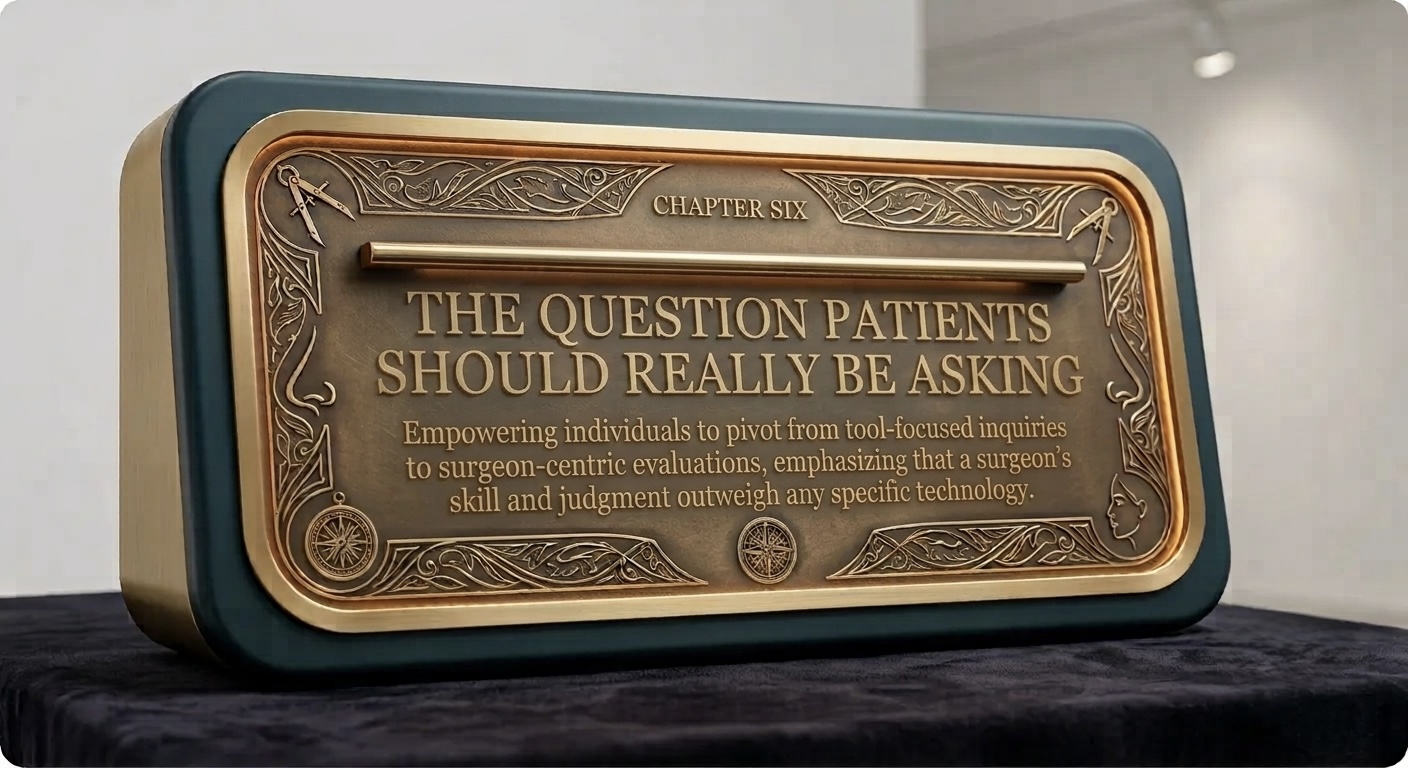 Chapter 6 of 6
The Bottom Line
The Question Patients Should Really Be Asking
Very few patients actually care about ultrasonic technology itself. What they truly want — and how to evaluate surgeons for it.
Read Chapter 6 →Front-View Improvement
While much of rhinoplasty discussion focuses on the side profile, front-view appearance matters just as much for everyday confidence — it's the angle most people see in conversation, photos, and the mirror.
- Crookedness or deviation of the nose left-to-right
- Width of the nasal bridge
- Asymmetry between the nostrils
- A wide or bulbous tip when viewed head-on
- Overall balance relative to the eyes and face
How It's Corrected
Precise bone and cartilage work — including osteotomies to straighten or narrow the bridge — combined with tip refinement, to bring the nose into symmetry from every angle, not just in profile.
Patient Results
Every rhinoplasty is its own story. Below, a selection of Dr. Markarian's patients share their full results — multiple angles, a year out, alongside the specific goals and surgical detail behind each outcome.
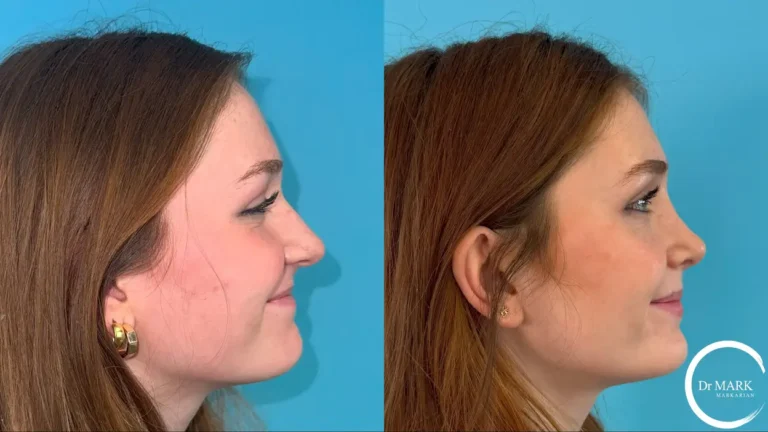
A Narrower Nose, A Tip That Holds Its Shape
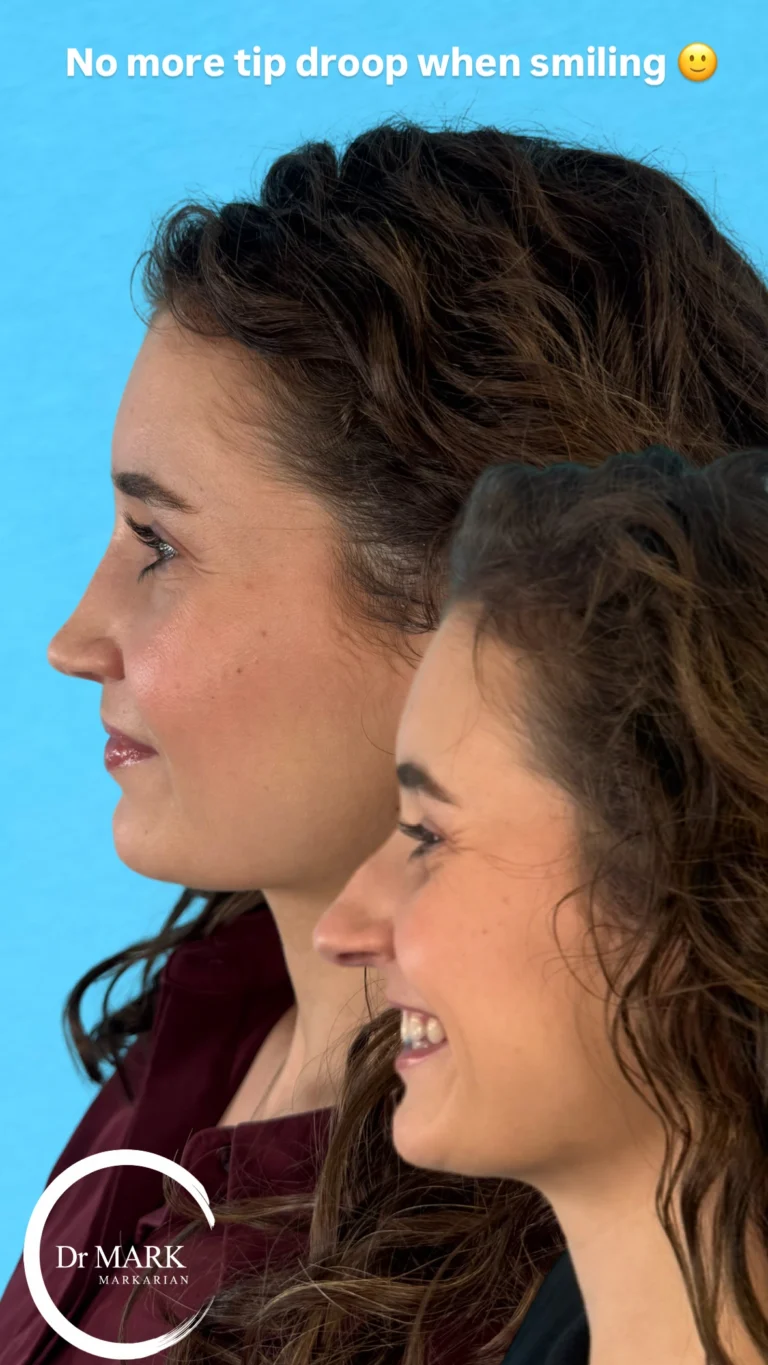
This young lady wanted a narrower nose with a natural, upturned tip that didn't droop when she smiled. As with most patients, she wanted to know what her nose would look like after the swelling went down — so Dr. Markarian shared the immediate post-op photos from the operating room on the day of surgery, giving her something to look forward to while the swelling improved over time.
To speed up swelling resolution, his common practice is to see patients every 1–2 months after surgery to inject steroids into the nose, especially the tip area, which takes the longest to heal.
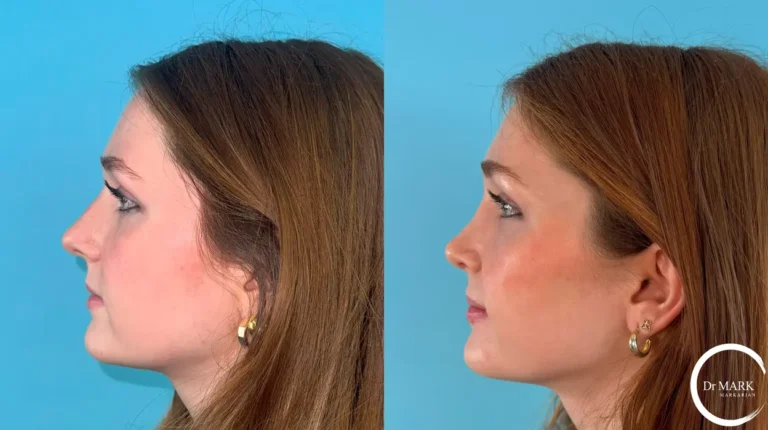 Left Lateral
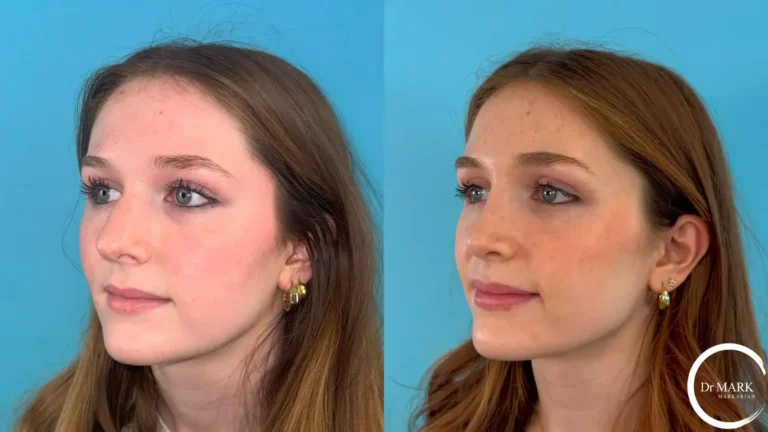 Left Oblique
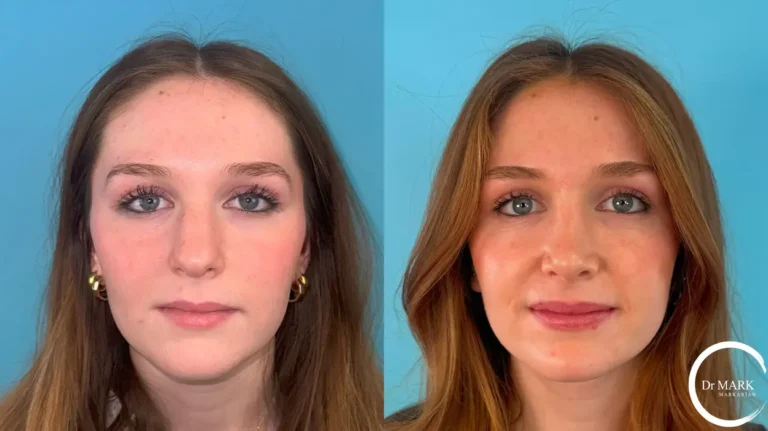 Front View
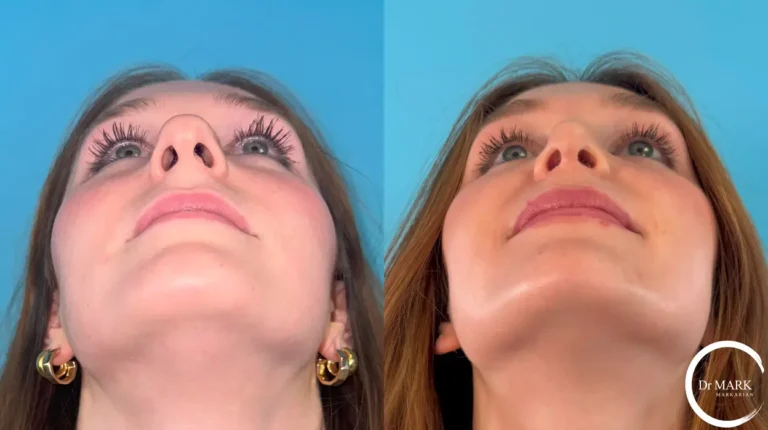 Worm's Eye View
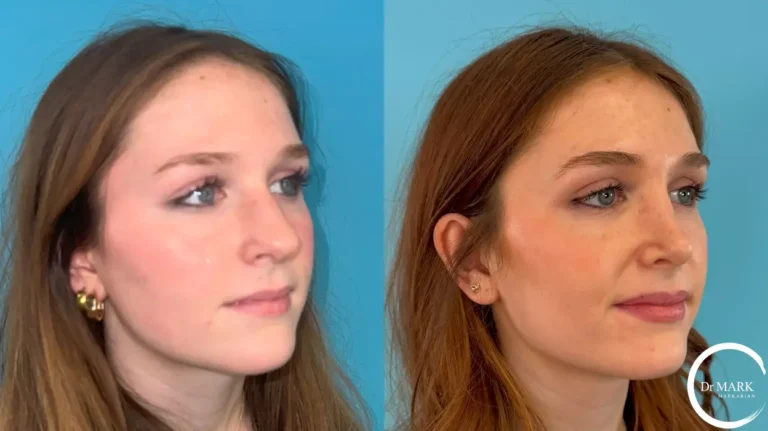 Right Oblique
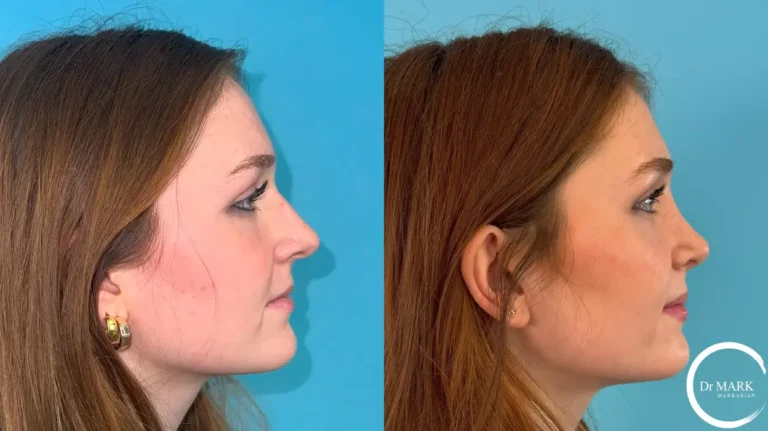 Right Lateral
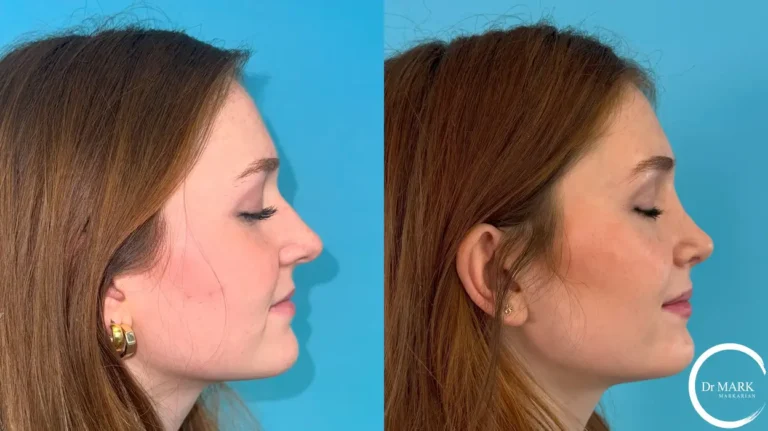 Right Lateral · At Rest
 Right Lateral · Smiling
Full views of her final results are shown here — notice how the tip stays in the perfect position even when smiling, from both the left and right views. The overall goal is always to maintain a natural result.
Key Surgical Maneuvers
Component hump reduction · reverse-angulated caudal septal trim · extended spreader grafts locked into a columellar strut graft · extended alar contour grafts · hybrid tip graft — together providing long-term structural stability while maintaining the aesthetic and functional goals.
Hump Reduction, Tip Deprojection & Refinement
This lovely young woman is 6 months post-op from a rhinoplasty, where about 80% of the swelling has improved. She underwent hump reduction, tip deprojection, and tip refinement, with the overall goal, as always, to maintain a natural result.
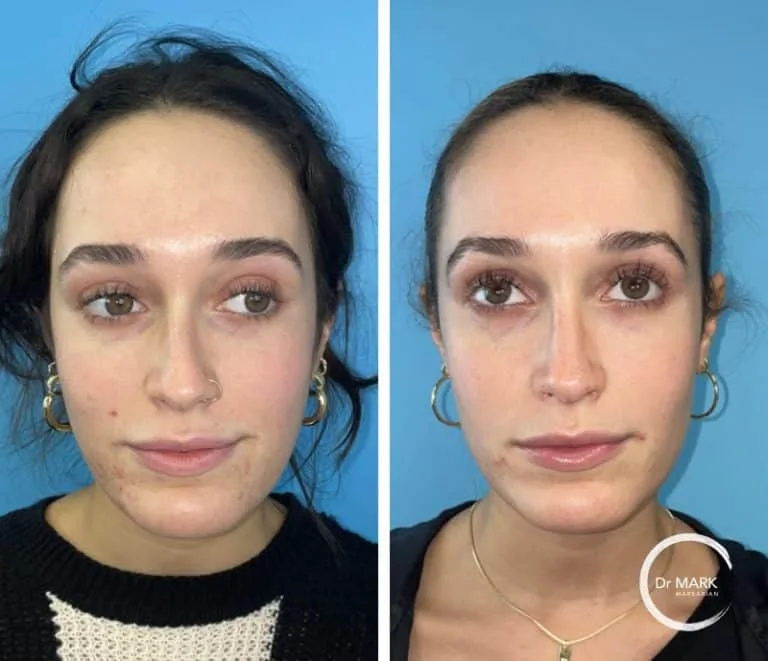
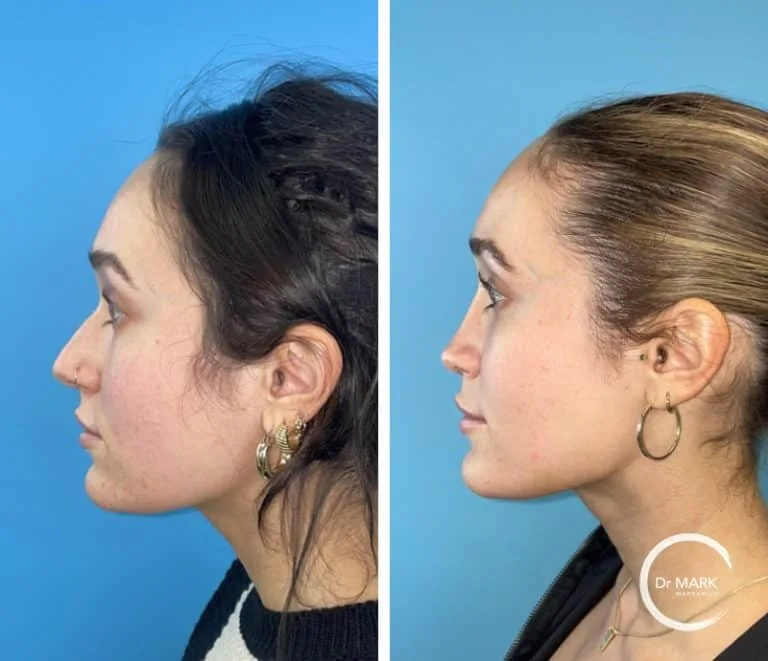
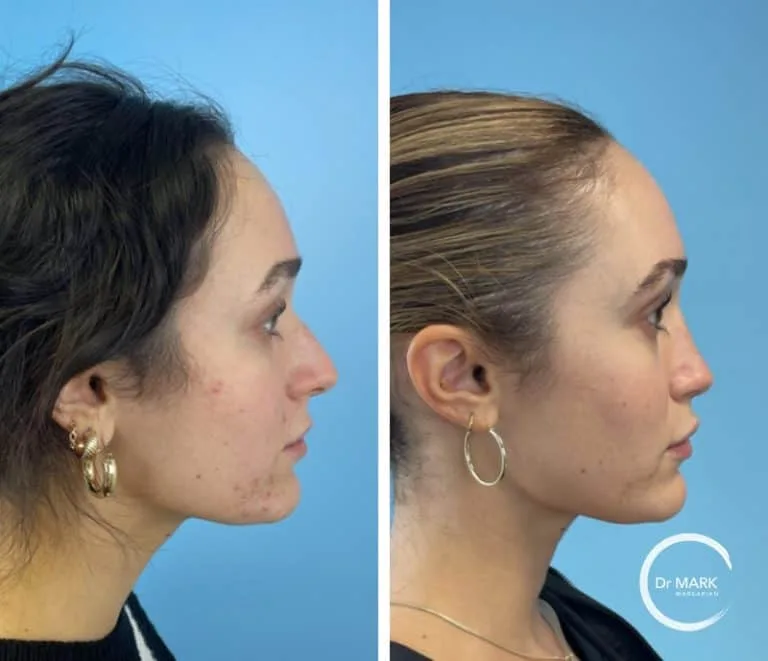
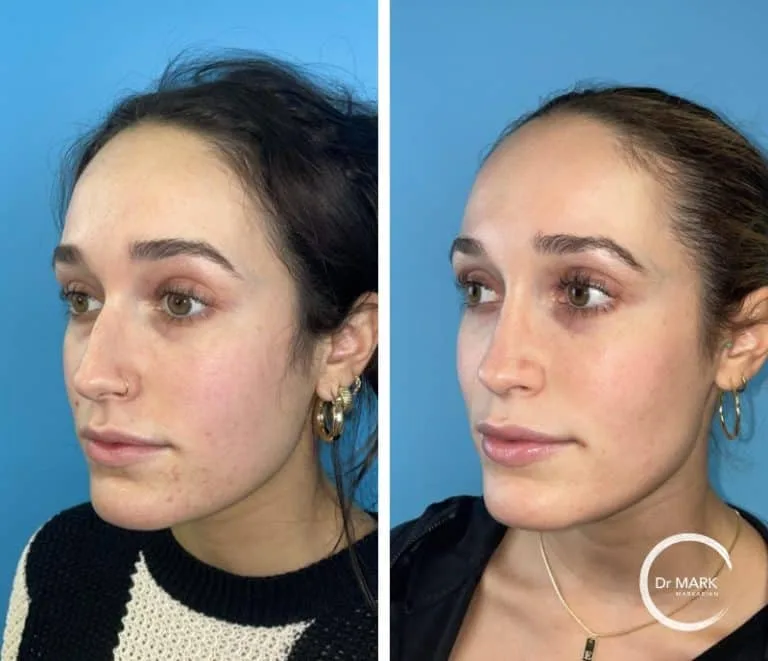
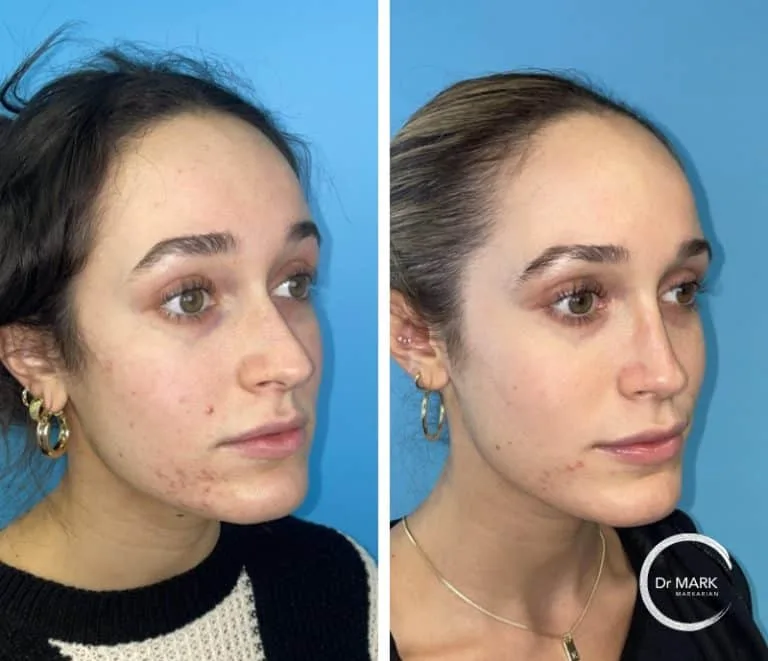
Key maneuvers included a component hump reduction, angulated caudal septal trim, tip deprojection with a columellar strut graft, spreader grafts, alar contour grafts, and a soft tissue tip graft. The multiple cartilage grafts were used to help provide long-term stability and structure, thereby maintaining the aesthetic and functional goals.
Oh, and she promised no more nose piercings…
An Improved Profile, Already Loved at 6 Weeks
One of the most common questions Dr. Markarian hears is how long it will take for a nose to look “good.” This young lady loves her nose at only 6 weeks after surgery. She wanted an improved profile with a refined tip, while maintaining a natural result.

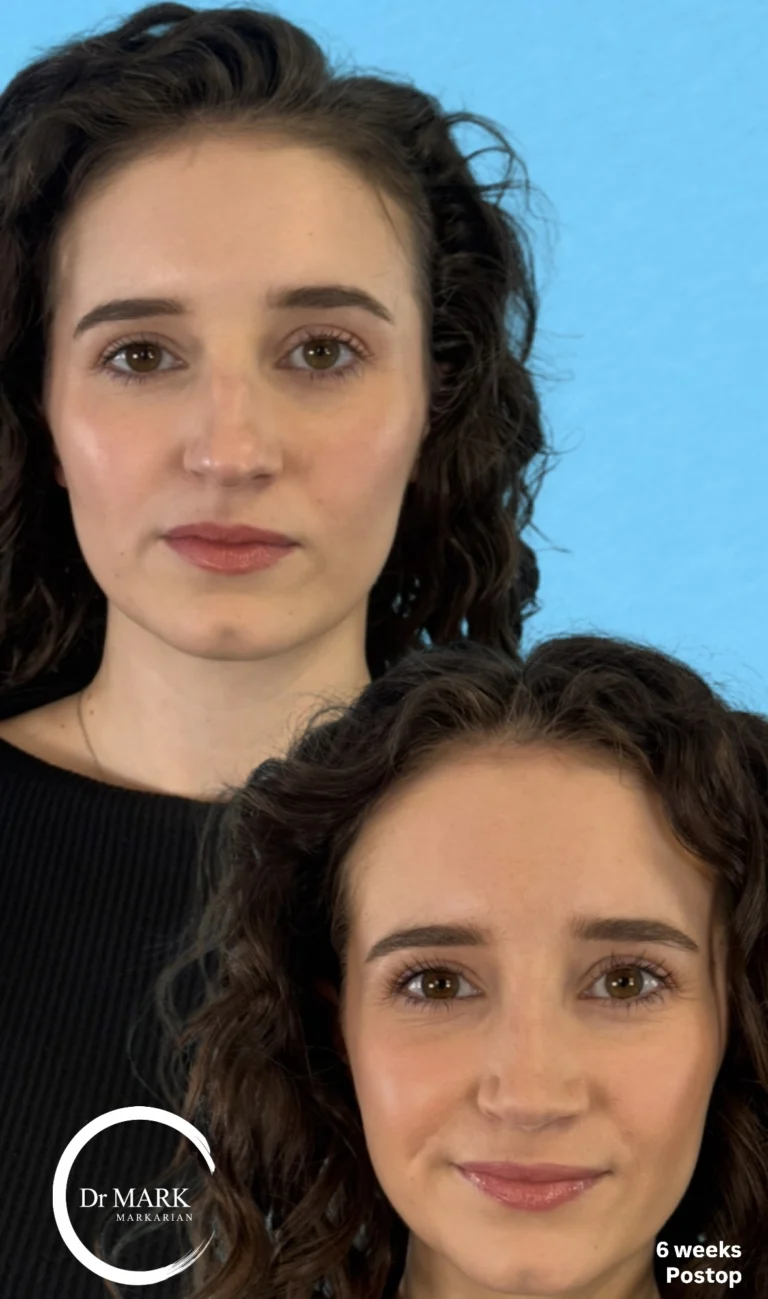

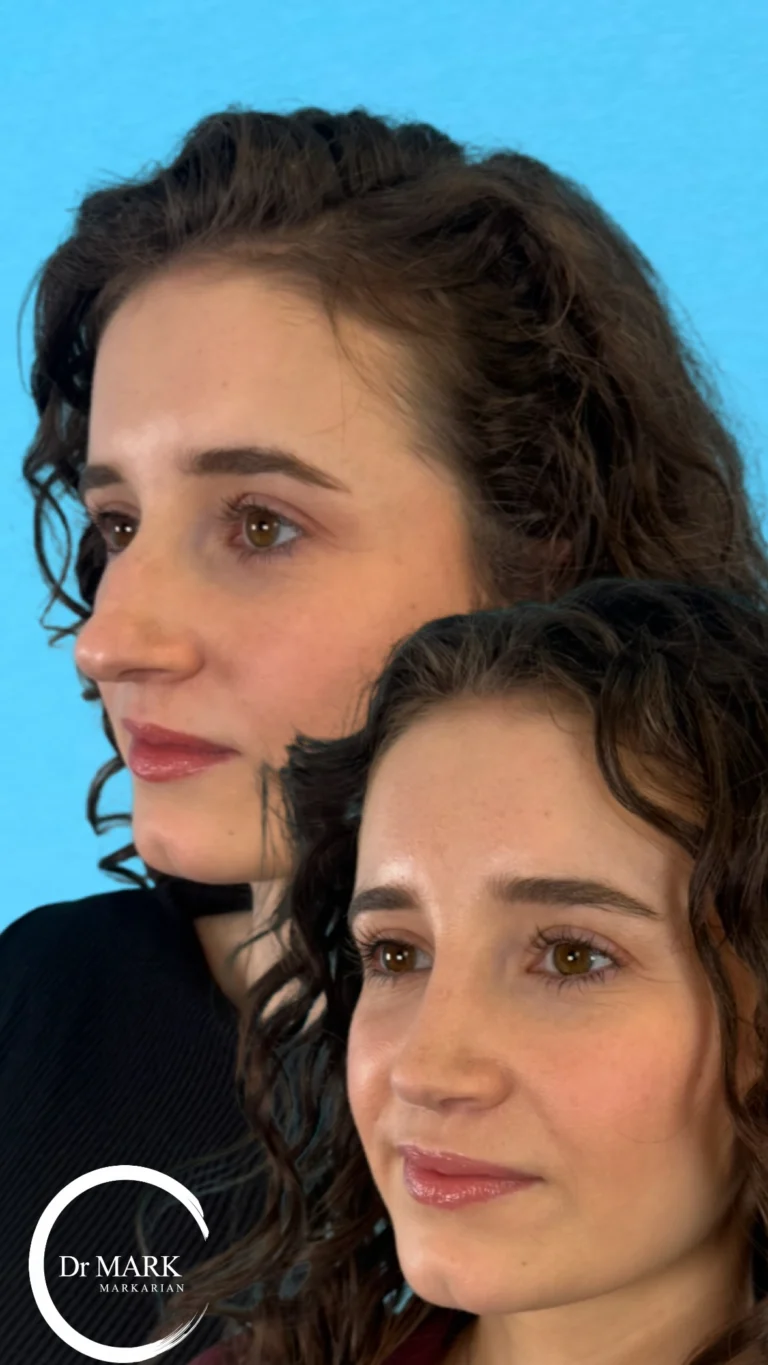
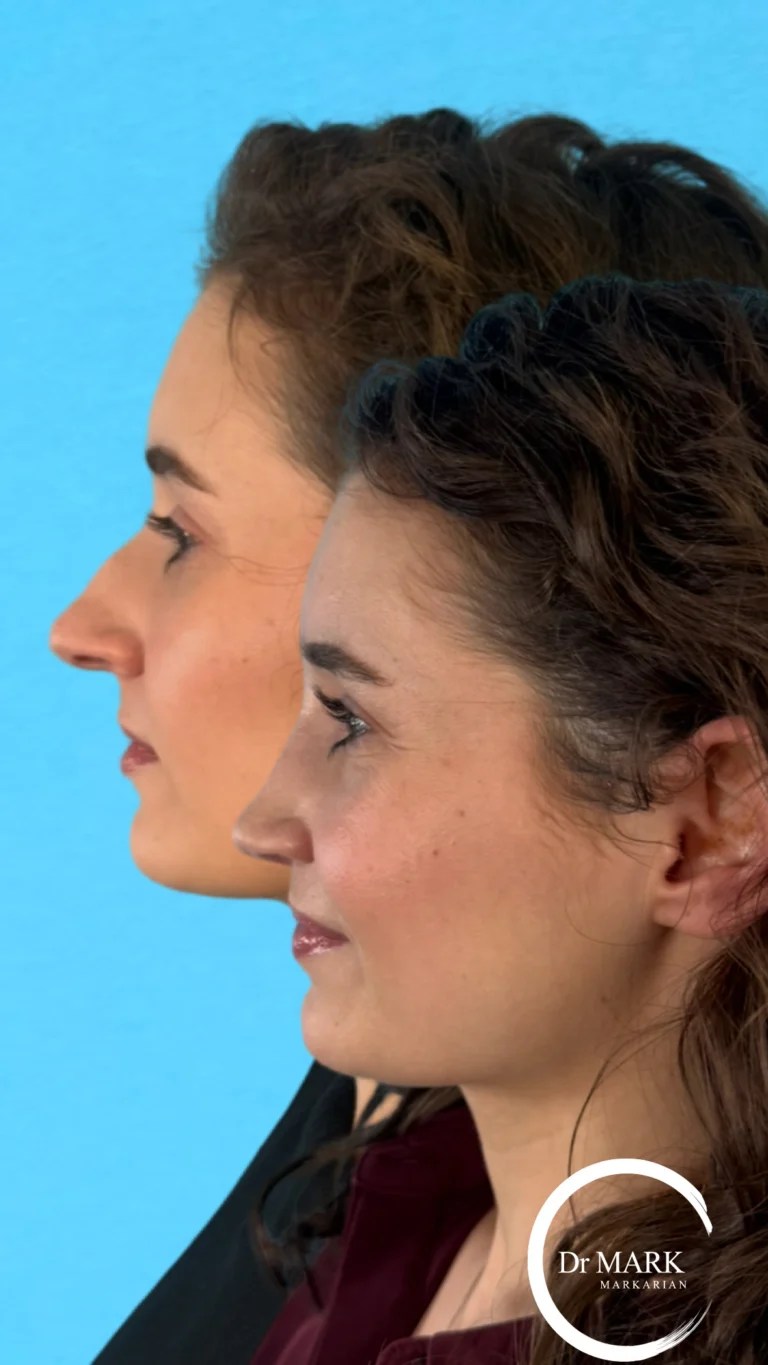
Key maneuvers included a component hump reduction, reverse angulated caudal septal trim, and tip deprojection. Multiple grafts were used, including extended spreader grafts locked into a columellar strut graft, spreader grafts, alar contour grafts, and a hybrid tip graft — all to help provide long-term stability and structure to maintain the aesthetic and functional goals.
Individual Results May Vary
Photos and video are of actual Dr. Markarian patients. Outcomes depend on individual anatomy, skin thickness, and the specific procedure performed — your results will be reviewed during your personal consultation.
Long-Term Outcomes
A well-performed rhinoplasty is meant to be a permanent, lifelong change — but permanent doesn't mean entirely static. The nose continues to age gradually over decades, the same as the rest of the face, with minor changes in skin and soft tissue occurring over many years.
Because rhinoplasty alters the underlying bone and cartilage framework, the structural change itself is permanent; what continues to evolve subtly afterward is the soft tissue draping over that framework — which is exactly why a conservative, anatomy-based surgical plan matters so much for how the result ages.
The Key to Stability
A surgical plan based on the patient's underlying anatomy and realistic, natural goals — not an aggressive change that looks striking immediately but ages poorly. Patients who follow post-operative care instructions generally see results remain stable and natural-looking for life.
Rhinoplasty FAQs
Expert answers from Dr. Markarian on the questions patients ask most before scheduling a rhinoplasty consultation. For a full list, visit our Rhinoplasty FAQs page.
Dr. Mark Markarian
Dr. Markarian is a Harvard-trained board-certified plastic surgeon with extensive surgery experience and a rigorous academic background. His areas of particular focus include Rhinoplasty (including Ethnic Rhinoplasty), Facelifts, Necklifts, Blepharoplasty, Breast Augmentation, and Body Contouring.
What makes Dr. Markarian different? It's not just the beautiful, natural results he delivers — it's his honesty, communication, and connection with his patients. Every patient gets his private cell phone number so they can easily reach him at any point in their surgical journey.
Begin Your Rhinoplasty Journey
Schedule a consultation with Dr. Markarian to discuss your goals, ask questions, and discover which treatment options are right for you.